
Cos’è il reverse engineering sociale?

Le tecniche utilizzate dai criminali informatici per aggirare la sicurezza di sistemi e applicazioni sono varie, ma alcune delle più efficaci sono quelle che utilizzano procedure di ingegneria sociale inversa. Negli attacchi di reverse social engineering, il criminale informatico si presenta alla vittima come l’elemento essenziale per risolvere un problema critico. I metodi di ingegneria sociale sono noti da tempo e sono molto diversi tra loro. Le aziende di tutti i tipi, comprese quelle con attività critiche, come le aziende energetiche, sono prese di mira dai criminali informatici e subiscono costantemente questi attacchi. Esempi di social engineering sono le telefonate agli utenti che vengono ingannati attraverso una serie di stratagemmi, di solito spacciandosi per un’azienda e con l’intento di farsi fornire utenti, password o dati da cui trarre profitto. Con una mossa ancora più bizzarra, alcuni frugano addirittura nei cassonetti della spazzatura per accedere a ricevute che forniscono dati che permetterebbero loro di accedere a dati sensibili. Il phishing o le famose lettere nigeriane sono altri tipi di attacchi di ingegneria sociale. Un attacco più sofisticato Che cos’è il reverse engineering sociale? In questo caso si tratta di attacchi di ingegneria sociale molto più sofisticati e meno rozzi di alcuni degli esempi descritti in precedenza. La differenza principale tra i due tipi di attacco è che nel social reverse engineering il criminale informatico si presenta come l’aiuto indispensabile all’utente per risolvere un problema. In altre parole, è l’utente stesso che si rivolge al criminale informatico. Un caso molto comune è quello in cui il criminale informatico ha già danneggiato il computer dell’utente. Si accorge che il suo computer o il suo cellulare iniziano a funzionare più lentamente o hanno qualche difetto che non sembra essere molto grave. Tuttavia, l’aggressore, fingendosi un’azienda ufficiale, convince l’utente di aver rilevato che il computer ha un problema serio e che può essere risolto da remoto. L’utente si fida dell’installazione di una soluzione di cyber-sicurezza e quindi gli fornisce tutti i tipi di dati o permette al cyber-criminale di distribuire malware senza che il proprietario del computer ne sia consapevole. Perché si usa il reverse engineering sociale? Gli attacchi di reverse social engineering offrono all’hacker una serie di vantaggi rispetto ad altre metodologie. Questi attacchi sono difficili da identificare per gli utenti, ma sono anche più difficili da eseguire per i criminali informatici rispetto, ad esempio, al phishing con ingegneria sociale. Affidarsi alle conoscenze di esperti come aggity, che aiutano le organizzazioni a implementare la giusta strategia di cybersecurity e che dispongono di soluzioni come Cloud & Cybersecurity by aggity, è fondamentale. È altrettanto essenziale formare gli utenti al rilevamento di tali minacce, poiché lo sviluppo delle necessarie capacità di rilevamento è il modo migliore per difendersi dagli attacchi di social reverse engineering. Una delle chiavi per prevenire questo tipo di attacco è insegnare agli utenti come distinguere questo tipo di attacco informatico. Allo stesso modo, anche i test di penetrazione o la definizione di una strategia di fiducia zero funzionano bene. Formazione per prevenire gli attacchi di social engineering In definitiva, la prevenzione è l’arma migliore contro questi attacchi informatici. Con l’aiuto di esperti, i dipendenti delle organizzazioni possono imparare a distinguere questo tipo di attacco con una serie di linee guida fondamentali. Quindi, per continuare con l’esempio precedente, se i dipendenti sanno a chi rivolgersi per ottenere assistenza tecnica, probabilmente non risponderanno alle domande poste dal criminale informatico. Non solo, ma il dipartimento di sicurezza informatica dell’azienda sarà informato dall’utente e potrà prendere le misure adeguate per evitare che il criminale informatico abbia successo. Inoltre, i servizi forniti da fornitori specializzati, insieme a tecnologie come EDR e XDR, sottolineano l’importanza che i lavoratori non condividano le loro credenziali di accesso con terze parti. La chiave è che gli attacchi di social reverse engineering richiedono che l’utente percepisca che l’attaccante sta offrendo un servizio critico. La falsa offerta di aiuto rimarrà un semplice contatto senza tutte le sue potenziali conseguenze negative se i dipendenti si rivolgeranno poi al tecnico specializzato o al fornitore.
What is reverse social engineering?
The techniques used by cybercriminals to circumvent the security of systems and applications are varied, but some of the most successful are those that employ reverse social engineering procedures. In reverse social engineering attacks, the cybercriminal presents himself to the victim as the essential element to solve a critical problem. The methods of social engineering have been known for a long time and are very diverse. Companies of all types, including those with critical activities, such as energy companies, are targeted by cybercriminals and constantly suffer from these attacks. Examples of social engineering include phone calls to users who are tricked through a series of ploys, usually posing as a company, and with the intention of getting users to provide them with users, passwords or data from which a profit can be made. In a more bizarre move, some even go through garbage containers to access receipts that provide data that will give them access to sensitive data. Phishing or the famous Nigerian letters are other types of social engineering attacks. A more sophisticated attack So what is reverse social engineering? In this case we are talking about social engineering attacks that are much more sophisticated and less crude than some of the examples described above. The main difference between the two types of attack is that in social reverse engineering the cybercriminal presents himself as the indispensable help the user needs to solve a problem. In other words, it is the user himself who approaches the cybercriminal. Thus, a very common case occurs when the cybercriminal has previously damaged the user’s computer. The latter finds that his computer or cell phone starts to run slower or has some kind of failure that does not seem very serious either. However, the attacker, posing as an official company, convinces the user that they have detected that the computer has a serious problem and that it can be fixed remotely. The user trusts that a cybersecurity solution is being installed and therefore provides him with all kinds of data or allows the cybercriminal to deploy malware without the owner of the computer being aware of it. Why is reverse social engineering used? Reverse social engineering attacks provide the hacker with a set of advantages over other methodologies. These attacks are difficult for users to identify, although they are also more complicated for cybercriminals to execute than, for example, social engineering phishing. Relying on the knowledge of experts like aggity, who help organizations to implement a correct cybersecurity strategy and who also have solutions such as Cloud & Cybersecurity by aggity, is essential. It is equally essential to train users in the detection of this type of threat, as developing the necessary detection skills is the best way to defend against reverse social engineering attacks. One of the keys to prevent this type of attack is to teach users how to distinguish this type of cyber-attack. In the same vein, penetration tests or the establishment of a zero-trust strategy also yield good results. Training to prevent social engineering attacks In the end, prevention is the best weapon to deal with this type of cyber-attack. With the help of experts, employees of organizations can learn to distinguish this type of attack with a series of basic guidelines. So, continuing with the previous example, if employees know who to go to for technical support, they probably won’t answer the questions asked by the cybercriminal. Not only that, but the company’s cybersecurity department will be informed by the user and will be able to take appropriate measures to prevent the cybercriminal from succeeding. Likewise, the services provided by specialized providers, which are combined with technologies such as EDR and XDR, emphasize the importance of workers not sharing their login credentials with third parties. The key is that social reverse engineering attacks require the user to perceive that the attacker is offering a critical service. The false offer of help will remain a mere contact without all its potential negative consequences if employees then turn to the specialist technician or supplier.
El machine learning en los recursos humanos
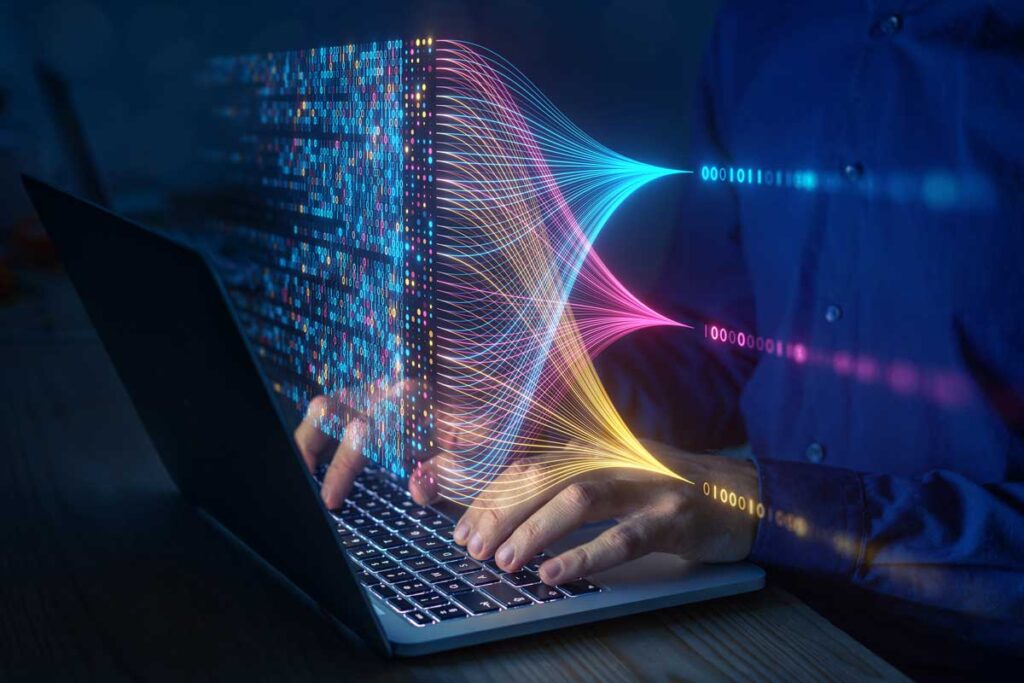
La utilización del machine learning en los recursos humanos promete transformar de forma definitiva la forma de operar de estos departamentos. Con su uso, las organizaciones pueden mejorar la relación que tienen con sus trabajadores. La administración de recursos humanos significa recopilar datos de una gran cantidad de áreas y el machine learning permite su análisis de forma rápida. El análisis de los datos es un elemento fundamental en cualquier estrategia de recursos humanos. De hecho, se lleva utilizando desde hace muchos años, sólo que el análisis de la información que tenían esos departamentos se hacía de forma manual con la ayuda de herramientas como los ERPs. Sin embargo, el empleo del machine learning en los recursos humanos está cambiando la forma en la que operan estos departamentos. Hasta hace no mucho tiempo, la recopilación y el procesamiento de los datos limitaba el tiempo que los trabajadores del departamento de RRHH dedicaba a la interpretación de los datos. Pero con el empleo del machine learning se está produciendo una transformación radical en las áreas de RRHH y gestión del talento, ya que su empleo permite responder de forma más eficiente a los diferentes escenarios que pueden plantearse dentro de una organización, contando con datos precisos y valiosos para acelerar la toma de decisiones. Recursos humanos y machine learning son dos conceptos que cada vez están más unidos. Las organizaciones están experimentando una auténtica transformación. Los departamentos de RRHH ya no sólo se encargan de las nóminas o de ejecutar las altas o bajas de los trabajadores. Gestionar el trabajo remoto, aplicar una retribución flexible o ejecutar políticas de conciliación son sólo algunas de las tareas que tiene encomendadas. Y para llevarlas a cabo, la inteligencia artificial y el machine learning, que si bien son dos conceptos diferentes son análogos, permiten acelerar los procesos. Con estas tecnologías, la labor del departamento de recursos humanos se ha expandido, de tal forma que se ha convertido en un impulsor de valor que ayuda a la organización a cumplir sus objetivos clave. Machine learning para administrar los RRHH La administración de recursos humanos significa recopilar datos de una gran cantidad de áreas. Una solución como BesTalent IA by aggity hace uso de la inteligencia artificial y el machine learning, para obtener información sobre actitudes y sentimientos de los empleados, verificar los procesos de formación, gestionar las compensaciones o abordar desarrollos externos relevantes, además de retener y atraer el talento que necesita la organización; y todo ello garantizando también la ciberseguridad. Uso del machine learning Son cada vez más las empresas que aprovechan los beneficios que la inteligencia artificial y el marchine learning proporcionan a los departamentos de recursos humanos. Diferentes informes señalan que alrededor de un 60% de empresas ya está aplicando aprendizaje automático en sus departamentos de RRHH. No obstante, su desarrollo se encuentra todavía en una fase temprana, por cuanto siete de cada 10 empresas que lo empleando consideran que aún no están obteniendo todo el rendimiento que puede llegar a ofrecer. Ventajas del uso del machine learning en RRHH Parece claro, por tanto, que el futuro de la gestión de los recursos humanos y el talento pasa por la aplicación del machine learning. Fundamentalmente porque su uso permite que los profesionales de RRHH pasen a ejercer labores de mayor labor para el negocio. La aplicación del machine learning tiene numerosos beneficios y en el ámbito de los RRHH permite, por ejemplo, que en un proceso de contratación pueda preseleccionar automáticamente un conjunto de currículos en base a determinados criterios clave facilitando así la identificación del candidato más idóneo. El machine learning permite así mismo predecir movimientos como puede ser la intención de un empleado de abandonar la empresa. Gracias al uso del machine learning el departamento de RRHH puede establecer parámetros para detectar los posibles escenarios de abandono y tomar decisiones para que el trabajador permanezca en la empresa ya que puede averiguar qué es lo que le está impulsando a irse. Todo ello, permitirá elaborar estrategias a futuro ya que, a medida que el algoritmo aprende a predecir el riesgo de fuga de los empleados más rápidamente, puede tomar medidas preventivas mucho antes de que un empleado se dé cuenta de que está en camino a su próximo trabajo. Las ventajas abarcan muchos más ámbitos. Son numerosas las aplicaciones del machine learning en los entornos empresariales que se benefician de su aplicación: fidelizar clientes, incrementar la productividad o mejorar la cadena de suministro son sólo algunas de ellas. Y, sin lugar a duda, recursos humanos y gestión del talento es uno de los departamentos que más valor obtiene de su uso.
L’apprendimento automatico nelle risorse umane
L’uso dell’apprendimento automatico nelle risorse umane promette di trasformare definitivamente il modo in cui i dipartimenti di risorse umane operano. Utilizzandole, le organizzazioni possono migliorare il rapporto con i propri dipendenti. La gestione delle risorse umane implica la raccolta di dati da un gran numero di aree e l’apprendimento automatico consente un’analisi rapida. L’analisi dei dati è un elemento fondamentale di qualsiasi strategia per le risorse umane. In realtà è in uso da molti anni, solo che l’analisi delle informazioni in possesso di questi dipartimenti veniva fatta manualmente con l’aiuto di strumenti come gli ERP. Tuttavia, l’uso dell’apprendimento automatico nelle risorse umane sta cambiando il modo in cui i dipartimenti HR operano. Non molto tempo fa, la raccolta e l’elaborazione dei dati limitavano il tempo che il personale delle risorse umane dedicava all’interpretazione dei dati. Ma l’uso dell’apprendimento automatico sta trasformando radicalmente le risorse umane e la gestione dei talenti.L’uso di questi strumenti consente di rispondere in modo più efficiente ai diversi scenari che possono presentarsi all’interno di un’organizzazione, fornendo dati accurati e preziosi per accelerare il processo decisionale. Le risorse umane e l’apprendimento automatico sono due concetti sempre più legati. Le organizzazioni stanno subendo una vera e propria trasformazione. I dipartimenti HR non si occupano più solo delle buste paga o dell’esecuzione delle registrazioni e delle cessazioni dei dipendenti. Gestire il lavoro a distanza, implementare una retribuzione flessibile e l’attuazione di politiche di conciliazione vita-lavoro sono solo alcuni dei compiti che vengono loro affidati. E per portarli a termine, l’intelligenza artificiale e l’apprendimento automatico che, pur essendo due concetti diversi, sono analoghi, permettono di velocizzare i processi. Grazie a queste tecnologie, il lavoro del dipartimento HR si è ampliato fino a diventare un fattore di valore che aiuta l’organizzazione a raggiungere i suoi obiettivi chiave. L’apprendimento automatico per gestire le risorse umane La gestione delle risorse umane implica la raccolta di dati provenienti da una vasta gamma di aree. Una soluzione come BesTalent IA di aggity utilizza l’opzione intelligenza artificiale e machine learning, per ottenere informazioni sugli atteggiamenti e i sentimenti dei dipendenti.L’obiettivo del progetto è quello di migliorare la capacità dell’organizzazione di gestire il pool di talenti, verificare i processi di formazione, gestire i compensi o affrontare gli sviluppi esterni rilevanti, oltre a trattenere e attrarre i talenti di cui l’organizzazione ha bisogno. cybersicurezza. Utilizzo dell’apprendimento automatico Sempre più aziende stanno sfruttando i vantaggi che l’intelligenza artificiale e l’apprendimento automatico apportano ai dipartimenti delle risorse umane. I rapporti indicano che circa il 60% delle aziende sta già applicando il machine learning nei propri dipartimenti HR. Tuttavia, il suo sviluppo è ancora in fase iniziale: sette aziende su dieci che lo utilizzano ritengono di non aver ancora colto tutti i vantaggi che può offrire. Vantaggi dell’utilizzo dell’apprendimento automatico nelle risorse umane Sembra chiaro, quindi, che il futuro delle risorse umane e della gestione dei talenti risieda nell’applicazione del machine learning. Fondamentalmente perché il suo utilizzo consente ai professionisti delle risorse umane di passare a ruoli più critici per l’azienda. L’applicazione dell’apprendimento automatico ha numerosi vantaggi e nel campo delle risorse umane consente, ad esempio, di preselezionare automaticamente una serie di CV in base a determinati criteri chiave, facilitando così l’individuazione del candidato più adatto. L’apprendimento automatico può anche prevedere movimenti come l’intenzione di un dipendente di lasciare l’azienda. Grazie all’uso del machine learning, il dipartimento delle risorse umane può stabilire dei parametri per individuare possibili scenari di abbandono e prendere decisioni affinché il dipendente rimanga in azienda, potendo scoprire cosa lo spinge ad andarsene. Tutto ciò consentirà di sviluppare strategie future perché, man mano che l’algoritmo impara a prevedere il rischio di fuga dei dipendenti in modo più rapido, può intraprendere azioni preventive molto prima che un dipendente si renda conto di essere in viaggio verso il suo prossimo lavoro. I vantaggi sono molto più ampi. Sono numerose le applicazioni dell’apprendimento automatico negli ambienti aziendali che traggono vantaggio dalla sua applicazione: fidelizzare i clienti, aumentare la produttività o migliorare la catena di approvvigionamento sono solo alcune di queste. E la gestione delle risorse umane e dei talenti è senza dubbio uno dei dipartimenti che trae maggior valore dal suo utilizzo.
Machine learning in human resources
The use of machine learning in human resources promises to definitively transform the way these departments operate. With its use, organizations can improve the relationship they have with their employees. Human resources management means collecting data from a large number of areas and machine learning allows for its analysis in a fast way. Data analysis is a fundamental element in any human resources strategy. In fact, it has been used for many years, but the analysis of the information held by these departments was done manually with the help of tools such as ERPs. However, the use of machine learning in human resources is changing the way these departments operate. Not so long ago, data collection and processing limited the time HR staff spent interpreting the data. But the use of machine learning is bringing about a radical transformation in the areas of HR and talent management.The use of this tool allows a more efficient response to the different scenarios that may arise within an organization, providing accurate and valuable data to accelerate decision making. Human resources and machine learning are two concepts that are becoming increasingly linked. Organizations are undergoing a real transformation. HR departments are no longer just in charge of payrolls or executing employee registrations or terminations. Manage remote work, implementing flexible remuneration and implementing work-life balance policies are just some of the tasks they are entrusted with. And to carry them out, artificial intelligence and machine learning which, although they are two different concepts, are analogous, make it possible to accelerate the processes. With these technologies, the work of the HR department has expanded so that it has become a value driver that helps the organization meet its key objectives. Machine learning to manage HR Human resource management means collecting data from a wide range of areas. A solution such as BesTalent IA by aggity makes use of the artificial intelligence and machine learning, to obtain information on employee attitudes and sentiments.The company’s management team is also responsible for the management of the organization’s talent, verifying training processes, managing compensation or dealing with relevant external developments, as well as retaining and attracting the talent the organization needs. cybersecurity. Use of machine learning More and more companies are taking advantage of the benefits that artificial intelligence and machine learning provide to human resources departments. Different reports indicate that around 60% of companies are already applying machine learning in their HR departments. However, its development is still at an early stage, as seven out of 10 companies using it consider that they are not yet getting all the benefits it can offer. Advantages of using machine learning in HR It seems clear, therefore, that the future of human resources and talent management lies in the application of machine learning. Fundamentally because its use allows HR professionals to move into more business-critical roles. The application of machine learning has numerous benefits and in the field of HR it allows, for example, that in a recruitment process it can automatically pre-select a set of resumes based on certain key criteria, thus facilitating the identification of the most suitable candidate. Machine learning can also predict movements such as an employee’s intention to leave the company. Thanks to the use of machine learning, the HR department can establish parameters to detect possible abandonment scenarios and make decisions so that the employee remains in the company since it can find out what is driving him/her to leave. All of this, will enable forward-looking strategies because, as the algorithm learns to predict employee flight risk more quickly, it can take preventative action long before an employee realizes they are on their way to their next job. The benefits extend to many more areas. There are numerous applications of machine learning in business environments that benefit from its application: building customer loyalty, increasing productivity or improving the supply chain are just some of them. And, without a doubt, human resources and talent management is one of the departments that derives the most value from its use.
El smarketing. ¿Qué es el marketing colaborativo?El smarketing. ¿Qué es el marketing colaborativo?El smarketing. ¿Qué es el marketing colaborativo?

El concepto de smarketing o marketing colaborativo nace para evitar los conflictos recurrentes que se producen entre los departamentos de ventas y de marketing. Gracias al empleo de una estrategia de smarketing las organizaciones pueden incrementar el número de ventas y de clientes. El uso de la analítica es fundamental en el smarketing. Gracias a ella se pueden proporcionar contenidos específicos para cada uno de los posibles clientes. El objetivo final de cualquier organización es incrementar las ventas para aumentar y fidelizar a los clientes y así, generar un aumento de los ingresos. En la consecución de esa meta el departamento de ventas juega uno de los papeles más importantes, pero necesita ayuda de otras divisiones de la organización para mejorar su eficiencia. Uno de los departamentos que juega un papel más importante en asegurar el éxito de la sección comercial es el de marketing. Sin embargo, la actividad de marketing no siempre está alineada y no es extraño observar cómo el departamento de ventas se queje de la baja calidad de los contactos o leads proporcionados por marketing o, viceversa, ni tampoco ver cómo éste se queja de las pocas ventas realizadas a pesar de los esfuerzos realizados para conseguir atraer a nuevos clientes. Smarketing: la unión hace la fuerza Pero ¿qué es el marketing colaborativo o también llamado smarketing? Se trata de un concepto que surge para solucionar ese enfrentamiento. Su objetivo no es otro que el de que ambas divisiones trabajen al unísono para conseguir mejorar e incrementar los resultados de ventas. Con el smarketing no sólo se logra incrementar el número de leads, también se optimizan los recursos de los que dispone una organización ya que se minimizan los conflictos que se producen de forma habitual entre ambos departamentos. Dicho de otra forma, el smarketing pretende afianzar todo ese proceso que se inicia en el momento en el que el departamento de marketing atrae a un posible cliente hasta que el departamento comercial termina de cerrar una venta con él. Para ello, se establece una estrategia conjunta, llamada también de sales enablement en su terminología anglosajona, de tal forma que el personal de ambos departamentos trabajan de manera alineada para evitar errores en los procesos, mejorar la calidad de los contactos establecidos, aumentar el número de ventas o decidir, por ejemplo, si es necesario potenciar un canal de comunicación u otro o establecer nuevas estrategias como el remarketing. Establecer una estrategia de smarketing El establecimiento de una estrategia de marketing colaborativo se debe realizar, a su vez de forma conjunta, aunque hay una serie de elementos que caracterizan a la sales enablement. Entre otros apartados, es necesario que el departamento comercial tenga acceso al mejor contenido de cada lead para de esta forma poder avanzar en el proceso de venta. Así mismo, es indispensable la formación del departamento comercial de forma que conozca a fondo cualquier novedad que se pueda producir en el porfolio de productos de la organización. El valor de la analítica Aplicar analítica es igualmente un elemento fundamental a la hora de establecer el smarketing. Hoy en día, con tecnologías como 5G, que potencian el análisis de los datos, no tiene sentido no aprovechar los datos de los que se dispone para incrementar tanto el número de clientes como las ventas. Con el uso de la analítica y del big data se pueden proporcionar contenidos específicos para cada uno de los posibles clientes, de forma que el departamento de marketing trasladará al de ventas unos leads de una mayor calidad para que éste tenga más facilidad a la hora de cerrar las ventas. Soluciones como Digital Customer Engagement by aggity son capaces de gestionar todos los datos y ofrecer una visión única de todas y cada una de las interacciones que se han producido con el cliente. De esta manera, el departamento de ventas no sólo puede responder a las necesidades del cliente, sino anticiparse a ellas. No obstante, aunque se incorpore la mejor de las tecnologías, el smarketing no funcionará si no se promueve una comunicación abierta y permanente entre el departamento de ventas y el de marketing para conseguir que la generación de leads esté alineada con todos y cada uno de sus objetivos.
Smarketing – What is Collaborative Marketing? smarketing – What is Collaborative Marketing? smarketing – What is Collaborative Marketing? smarketing – What is Collaborative Marketing?
The concept of smarketing or collaborative marketing was born to avoid recurring conflicts between sales and marketing departments. By employing a smarketing strategy, organizations can increase the number of sales and customers. The use of analytics is fundamental in smarketing. Thanks to it, it is possible to provide specific content for each of the potential customers. The ultimate goal of any organization is to increase sales in order to increase customer loyalty and generate increased revenue. In achieving this goal, the sales department plays one of the most important roles, but it needs help from other divisions of the organization to improve its efficiency. One of the departments that plays the most important role in ensuring the success of the commercial section is marketing. However, marketing activity is not always aligned It is not unusual to see the sales department complaining about the low quality of the contacts or leads provided by marketing, or vice versa, or to see marketing complaining about the few sales made despite the efforts made to attract new customers. Smarketing: Strength through unity Butwhat is collaborative marketing or also called smarketing? It is a concept that arises to solve this confrontation. His goal is to ensure that both divisions work in unison to improve and increase sales results. Smarketing not only increases the number of leads, but also optimizes the resources available to an organization by minimizing the conflicts that usually occur between the two departments. In other words, smarketing aims to consolidate the whole process that starts from the moment the marketing department attracts a potential customer until the sales department closes a sale with him. For this purpose, a joint strategy, also known as the sales enablement in its Anglo-Saxon terminology, in such a way that the personnel of both departments work in an aligned manner to avoid errors in the processes, improve the quality of the contacts established, increase the number of sales or decide, for example, whether it is necessary to promote a communication channel or other or establish new strategies such as remarketing. Establish a smarketing strategy The establishment of a strategy for collaborative marketing The following elements, however, are characteristic of a joint project, although there are a number of elements that characterize the sales enablement. Among other things, it is necessary for the sales department to have access to the best content for each lead in order to move forward in the sales process. Likewise, it is essential to train the sales department so that it is fully aware of any new developments that may occur in the organization’s product portfolio. The value of analytics Applying analytics is also a fundamental element in establishing smarketing. Today, with technologies like 5G empowering data analytics, it makes no sense not to leverage the data you have to increase both the number of customers and sales. With the use of analytics and big data specific content can be provided for each of the potential customers, so that the marketing department will pass on to the sales department specific content for each of the potential customers, so that the marketing department will pass on to the sales department specific content for each of the potential customers. leads to higher quality to make it easier for them to close sales. Solutions such as Digital Customer Engagement by aggity are able to manage all data and provide a single view of each and every interaction that has taken place with the customer. In this way, the sales department can not only respond to customer needs, but also anticipate them. However, even if the best technology is incorporated, smarketing will not work if open and permanent communication is not promoted between the sales and marketing departments to ensure that lead generation is aligned with each and every one of their objectives.
Smarketing – cos’è il marketing collaborativo? smarketing – cos’è il marketing collaborativo? smarketing – cos’è il marketing collaborativo? smarketing – cos’è il marketing collaborativo?
Il concetto di smarketing o marketing collaborativo è nato per evitare i ricorrenti conflitti tra i reparti di vendita e di marketing. Utilizzando una strategia di smarketing, le organizzazioni possono aumentare il numero di vendite e di clienti. L’uso delle analisi è fondamentale per lo smarketing. Può essere utilizzato per fornire contenuti specifici per ogni potenziale cliente. L’obiettivo finale di qualsiasi organizzazione è quello di aumentare le vendite per incrementare e fidelizzare i clienti e quindi generare maggiori entrate. Per raggiungere questo obiettivo, il reparto vendite svolge uno dei ruoli più importanti, ma ha bisogno dell’aiuto di altre divisioni dell’organizzazione per migliorare la propria efficienza. Uno dei reparti che svolge il ruolo più importante per garantire il successo della sezione commerciale è il marketing. Tuttavia, le attività di marketing non sono sempre allineate Non è raro vedere il reparto vendite lamentarsi della scarsa qualità dei contatti o dei lead forniti dal marketing o viceversa, né è raro vedere il marketing lamentarsi delle basse vendite nonostante gli sforzi fatti per attirare nuovi clienti. Smarketing: la forza dei numeri Macos’è il marketing collaborativo o smarketing? Si tratta di un concetto nato per risolvere questo confronto. Il suo obiettivo è far sì che entrambe le divisioni lavorino all’unisono per ottenere risultati di vendita migliori e maggiori. Lo Smarketing non solo aumenta il numero di contatti, ma ottimizza anche le risorse a disposizione di un’organizzazione, riducendo al minimo i conflitti che di solito si verificano tra i due reparti. In altre parole, lo smarketing mira a rafforzare l’intero processo che inizia dal momento in cui il reparto marketing attrae un potenziale cliente fino a quando il reparto commerciale conclude una vendita con il cliente. A tal fine, viene stabilita una strategia comune, nota anche come «strategia congiunta». abilitazione alle vendite nella sua terminologia anglosassone, in modo che il personale di entrambi i dipartimenti lavori in allineamento per evitare errori nei processi, migliorare la qualità dei contatti stabiliti, aumentare il numero di vendite o decidere, ad esempio, se è necessario promuovere una canale di comunicazione o altro o stabilire nuove strategie come il remarketing. Stabilire una strategia di smarketing La definizione di una strategia per marketing collaborativo Gli elementi che seguono, tuttavia, caratterizzano un approccio congiunto, anche se ci sono diversi elementi che caratterizzano la abilitazione alle vendite. Tra l’altro, è necessario che il reparto vendite abbia accesso ai contenuti migliori per ogni lead, in modo da poter portare avanti il processo di vendita. Allo stesso modo, è fondamentale formare il reparto vendite in modo che sia pienamente consapevole di qualsiasi novità che possa riguardare il portafoglio prodotti dell’organizzazione. Il valore dell’analisi Anche l’applicazione delle analisi è un elemento chiave per stabilire lo smarketing. Oggi, con tecnologie come il 5G che potenziano l’analisi dei dati, non ha senso non sfruttare i dati in tuo possesso per aumentare il numero di clienti e le vendite. Con il utilizzo di analisi e big data È possibile fornire contenuti specifici per ciascuno dei potenziali clienti, in modo che il reparto marketing trasmetta al reparto vendite contenuti specifici per ciascuno dei potenziali clienti, in modo che il reparto marketing trasmetta al reparto vendite contenuti specifici per ciascuno dei potenziali clienti. porta ad una maggiore qualità per rendere più facile la chiusura delle vendite. Soluzioni come Digital Customer Engagement di aggity sono in grado di gestire tutti i dati e di fornire una visione unica di ogni singola interazione con il cliente. In questo modo, il reparto vendite può non solo rispondere alle esigenze dei clienti, ma anche anticiparle. Tuttavia, anche con la migliore tecnologia, lo smarketing non funzionerà senza una comunicazione aperta e continua tra vendite e marketing, per garantire che la generazione di lead sia allineata con ogni singolo obiettivo.
El trabajo del futuro en la fábrica inteligente
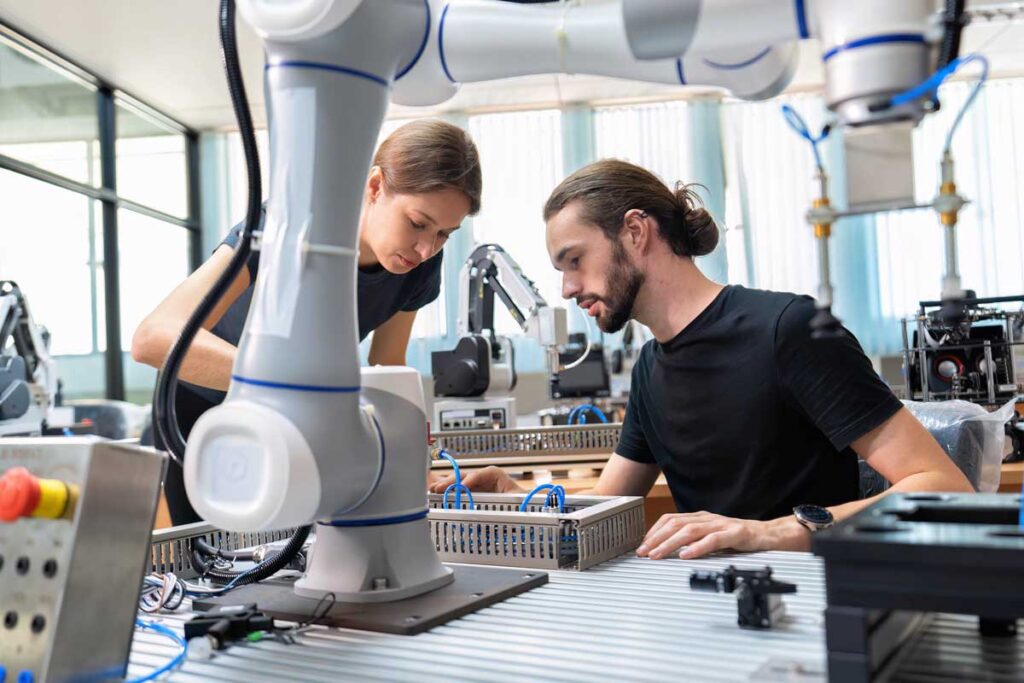
El trabajo del futuro en la fábrica inteligente va a pasar necesariamente por la colaboración entre máquinas y trabajadores humanos. Ya existen numerosos proyectos para facilitar esa cooperación. Buena parte de los proyectos para avanzar hacia la fábrica inteligente pasan por la incorporación de la realidad virtual. No se sabe a ciencia cierta cuáles serán todos los trabajos que van a aparecer en el futuro. Lo que sí se sabe es que, sobre todo en los entornos de fábrica inteligente e Industria 4.0, la relación entre humanos y máquinas va a ser mayor. Por esto, se están realizando diferentes proyectos con el fin de desarrollar tecnologías que faciliten la creación de entornos colaborativos entre máquinas y humanos. En general, en los entornos industriales actuales, las máquinas y robots operan de forma separada de los empleados y eso es lo que se quiere cambiar en la fábrica inteligente. De la misma forma que, tras la irrupción de la pandemia, se impulsó el trabajo colaborativo entre los empleados, con la incorporación de distintas herramientas, el trabajo del futuro en la fábrica inteligente pasa por crear entornos colaborativos para que los trabajadores y las máquinas puedan trabajar de forma conjunta para así maximizar el trabajo que realizan ambos. El trabajo del futuro será colaborativo Se trata, en definitiva, de que la fábrica inteligente sea colaborativa en todos los aspectos y que la tecnología ayude en múltiples frentes y no sólo en lo que se refiere a una fabricación inteligente de productos. En este sentido, tecnologías como la automatización, la realidad virtual y realidad aumentada, los interfaces adaptativos, la inteligencia artificial o los chatbots conversacionales ya se están incorporando a las fábricas inteligentes y están posibilitando que el trabajo del futuro sea más productivo y colaborativo. Buena parte de los proyectos para avanzar en las fábricas inteligentes 4.0 pasan por la incorporación de la realidad virtual. En este caso, esta tecnología ayuda en acciones formativas de manera inmersiva que hacen creer que el trabajador se encuentra en un entorno real. Algo parecido a los simuladores de vuelo de los pilotos, sólo que en este caso la realidad virtual imita el control manual del mecanizado de una fábrica con los movimientos de la herramienta. El empleado interactúa gracias a la realidad mixta de tal forma que tenga la sensación de está tocando un elemento real. Ejemplos de fábrica inteligente Las innovaciones que se están produciendo son múltiples. Por ejemplo, el procesamiento del lenguaje natural está permitiendo que los trabajadores de una fábrica inteligente puedan directamente entablar conversación con el robot para plantearle dudas acerca de una determinada operación de mantenimiento que se desarrolle en la fábrica y le enseñe a resolver esa situación. Y es con la realidad mixta con la que se están produciendo buena parte de los desarrollos de la fábrica inteligente, sobre todo en lo que se refiere a los apartados de montaje. En este caso, un trabajador programa las acciones que va a ejecutar un robot antes de que se ponga a trabajar en la tarea. Gracias a esa realidad mixta, podrá saber si la ejecución que realice el robot va a ser correcta y en el caso de que sea así, el empleado dará la orden a través de la voz para que el robot ejecute el trabajo. Herramientas como las que propone el catálogo de aggity para Industria 4.0 ya permiten avanzar en el trabajo del futuro en la fábrica inteligente. Empleando nuevas tecnologías como la analítica de datos o la Inteligencia Artificial, este tipo de soluciones mejoran la colaboración entre las máquinas y los trabajadores, incrementan la eficiencia de la fábrica, la capacidad de planificación y la calidad de los productos y dotan, además, a la organización de mejores técnicas para protegerse frente a ciberataques. Ventajas para máquinas y humanos La incorporación de todo este tipo de soluciones para avanzar hacia la fábrica inteligente va a tener un extenso recorrido en los próximos años. Sus bondades no sólo significarán un incremento de la productividad para las empresas del sector industrial, sino que los empleados podrán realizar su labor de una forma más eficiente, lo que se traducirá en una mejora del bienestar y la calidad de vida de los trabajadores, puesto que se verán obligados a adaptarse a la tecnología, sino que será el propio trabajador el que avance en su aprendizaje con la ayuda de la máquina.
Il lavoro del futuro nella fabbrica intelligente
Il lavoro del futuro nella fabbrica intelligente comporterà necessariamente la collaborazione tra macchine e lavoratori umani. Sono già in atto numerosi progetti per facilitare questa cooperazione. Molti dei progetti per la realizzazione della fabbrica intelligente prevedono l’incorporazione della realtà virtuale. Non è certo quali saranno i lavori che appariranno in futuro. Quello che si sa è che, soprattutto nelle fabbriche intelligenti e negli ambienti dell’Industria 4.0, il rapporto tra uomo e macchina sarà sempre più forte. Per questo motivo, si stanno portando avanti diversi progetti con l’obiettivo di sviluppare tecnologie che facilitino la creazione di ambienti collaborativi tra macchine ed esseri umani. In generale, negli ambienti industriali di oggi, le macchine e i robot operano separatamente dai dipendenti, ed è questo l’obiettivo della fabbrica intelligente. Nello stesso modo in cui, dopo lo scoppio della pandemia, è stato incoraggiato il lavoro collaborativo tra i dipendenti, con l’incorporazione di diversi strumenti, il lavoro del futuro nella fabbrica intelligente è creare ambienti collaborativi per far lavorare insieme lavoratori e macchine per massimizzare il lavoro svolto da entrambi. Il lavoro del futuro sarà collaborativo In definitiva, la fabbrica intelligente deve essere collaborativa in tutti i suoi aspetti e la tecnologia deve aiutare su più fronti e non solo in termini di produzione intelligente di prodotti. In questo senso, tecnologie come l’automazione, la realtà virtuale e aumentata, le interfacce adattive, l’intelligenza artificiale e i chatbot conversazionali sono già state incorporate nelle fabbriche intelligenti e stanno rendendo possibile che il lavoro del futuro sia più produttivo e collaborativo. Molti dei progetti di avanzamento delle fabbriche intelligenti 4.0 prevedono l’incorporazione della realtà virtuale. In questo caso, questa tecnologia aiuta a formare le azioni in modo immersivo, facendo credere al lavoratore di trovarsi in un ambiente reale. È simile ai simulatori di volo dei piloti, ma in questo caso la realtà virtuale imita il controllo manuale del processo di lavorazione in fabbrica con i movimenti dell’utensile. Il dipendente interagisce grazie alla realtà mista in modo tale da avere la sensazione di toccare un elemento reale. Esempi di fabbriche intelligenti Le innovazioni in atto sono molteplici. Ad esempio, l’elaborazione del linguaggio naturale permette agli operai di una fabbrica intelligente di conversare direttamente con il robot per porre domande su una particolare operazione di manutenzione della fabbrica e insegnargli come risolvere la situazione. Ed è proprio con la realtà mista che si stanno realizzando molti degli sviluppi della fabbrica intelligente, soprattutto nelle aree di assemblaggio. In questo caso, un lavoratore programma le azioni che il robot deve eseguire prima che inizi a lavorare sul compito. Grazie a questa realtà mista, sarà in grado di sapere se la prestazione del robot sarà corretta e, in tal caso, il dipendente darà l’ordine vocale al robot di svolgere il lavoro. Strumenti come quelli proposti nel catalogo di aggity per l’Industria 4.0 stanno già facendo progressi nel lavoro del futuro nella fabbrica intelligente. Utilizzando nuove tecnologie come l’analisi dei dati o l’Intelligenza Artificiale, tali soluzioni migliorano collaborazione tra macchine e operai, aumentano l’efficienza della fabbrica, la capacità di pianificazione e la qualità dei prodotti, oltre a fornire all’organizzazione una migliore tecniche di protezione dagli attacchi informatici. Vantaggi per le macchine e gli esseri umani L’integrazione di tutti questi tipi di soluzioni per arrivare alla fabbrica intelligente avrà una lunga strada da percorrere nei prossimi anni. I suoi benefici non si tradurranno solo in un aumento della produttività per le aziende del settore industrialeI dipendenti saranno in grado di svolgere il loro lavoro in modo più efficiente, il che si tradurrà in un aumento della produttività. migliorare il benessere e la qualità della vita dei lavoratoriI lavoratori non saranno costretti ad adattarsi alla tecnologia, ma saranno i lavoratori stessi a progredire nel loro apprendimento con l’aiuto della macchina.