
Direct to consumer and retail media
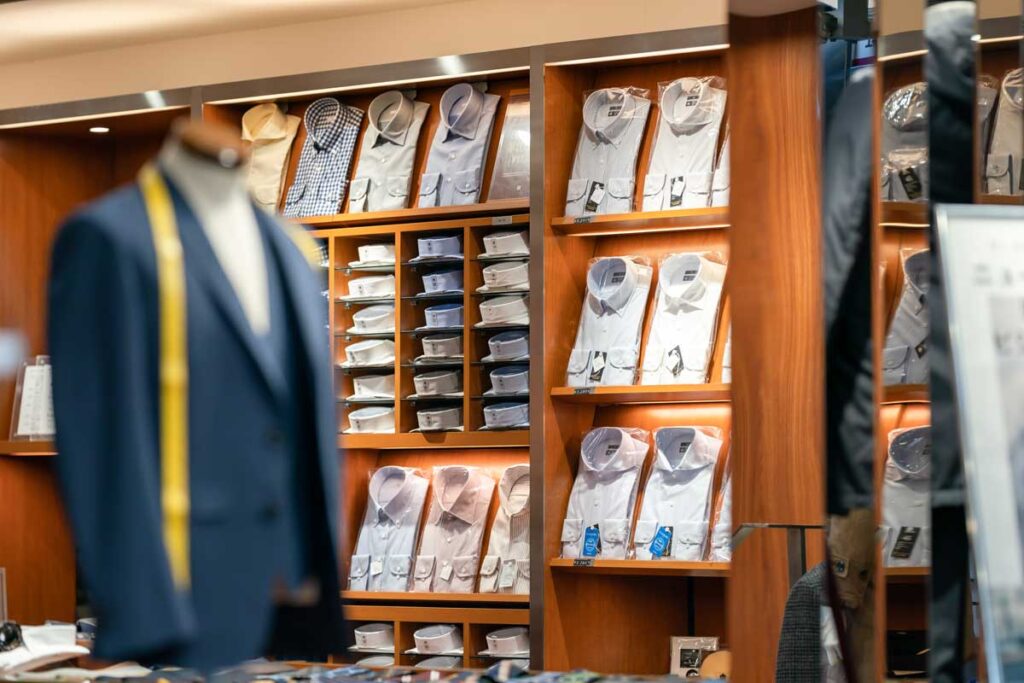
Two of the big trends in the retail market are direct to consumer and retail media. These are two concepts that benefit both the brands and the companies that make up the retail sector. Direct to consumer or D2C and retail media are revolutionizing the way brands interact with consumers and how products are marketed. The retail sector is one of the sectors that is innovating the most to attract and retain new consumers and thus increase sales. Trends such as ecommerce automation or smart retail are becoming more and more widespread. In recent times, to all this terminology aimed at improving the retail shopping experience and thus contributing to business growth, two new concepts have been added: direct to consumer, also known as D2C, and retail media. These practices represent a revolution in the way brands interact with consumers and how they market their products. What is each of them? Direct to consumer As its name suggests, it is a concept that aims to reach the consumer directly. The novelty is that the traditional intermediary is dispensed with to attract users. In no case does it mean that the brand is going to do without these retailers, but simply that it is adding a new sales channel with which it can establish a relationship of greater trust with the customer. The advantages of establishing a D2C channel benefit both brands and the customer. For the former, it gives them greater control over the user experience, from product presentation to after-sales service, allowing them to establish better strategies to build user loyalty. And, because the user is providing data directly to youthe brand can carry out an analysis of purchasing behaviors to design customized strategies, both online and on-site. On the other hand, by eliminating intermediaries from the equation, each sale produced will have a higher profitability and a higher profit margin. On the other hand, consumers also benefit from D2C. They have direct access to a wider variety of products. They can also acquire products and/or services at more competitive prices and enjoy exclusive promotions, which is essential in retail and the current high inflation situation. Retail Media On the other hand, with retail media, companies aim to monetize advertising and marketing space. As an example, the goal is for brands to take advantage of the power of ecommerce platforms such as Amazon or El Corte Inglés to place ads and promotional content on those websites and in their apps. Retail media is one of the trends of the future in the retail sector as both brands and retailers benefit. The main advantage of retail media for brands is that they can reach a much broader spectrum of audiences and take advantage of the customer segmentation provided by the retailer. Thanks to this segmentation, they can target their ads to the right consumers at the right time. In addition, retail media provides greater brand visibility and exposure. The retailer, for its part, can achieve an increase in revenues, especially if it incorporates the products of a brand with a high level of customer loyalty into its catalog. In doing so, you can also extend the margins with which you usually work. Two concepts that are not mutually exclusive It may seem that direct to consumer and retail media are two exclusive concepts, but the reality is that both imply benefits for both brands and retailers. The D2 channel, for example, may promote the retail platform, while the retail platform may allow for brand-direct channel shopping, taking advantage of both trends. In this sense, the use of solutions such as Digital Customer Engagement by aggity allows to establish a correct strategy to carry out both D2C and retail media actions.
Retail media: from digital to physical retail

The traditional retail media strategy in digital channels can be transferred to physical stores, with a benefit for the retailer, the brands and the customer, who will enjoy a completely satisfactory shopping experience. One of the main advantages of retail media is its ability to reach consumers at the right time and in the right place. Retail is a clear example of how, despite the increase in online shopping, physical retail is impossible to replace. For this reason, the retailers of the retailers of the future are adapting their sales and marketing strategies to a hybrid environment, where both worlds coexist and complement each other. Within the retail sector trends, retail media is presented as a strategic weapon to improve sales and be closer to customers. What is retail media The main objective of the companies that make up the retail sector, regardless of whether it is digital or physical retail, is to be closer and closer to the customer. Solutions such as Digital Customer Engagement by aggity allow you to understand user needs, generate personalized communications and take advantage of real-time marketing automation through the use of analytics and artificial intelligence. These solutions make use of the vast amount of data generated by customers, both on digital platforms and at a retailer’s physical point of sale. These data include purchasing habits, characteristics of the products purchased, times at which they shop, type of promotions that are most effective, etc. With this data set, specific ads are created for each of them, which appear, for example, on the e-commerce platform. Thanks to the use of analytics, marketing departments can segment audiences and display fully customized advertisements for each customer. This is the main characteristic of retail media. Retail Media at the point of sale But since customers are not going to stop visiting physical stores, retailers are incorporating the retail media strategy into their stores. Also known as point-of-sale advertising, it aims to enable retailers to monetize their audience and offer advertising space to promote products and services of different brands. One of the main advantages of retail media is its ability to reach consumers at the right time and in the right place. Retail media takes advantage of virtually everything as it leverages advertising space found in physical stores, on websites and in mobile apps. Thanks to omnichannel and through data analytics, brands can present their marketing and advertising messages just when consumers are most likely to make purchasing decisions, resulting in increased advertising effectiveness. More advantages of retail media For the retailer who owns one or more physical stores, retail media also offers the possibility of increasing revenues by opening up the advertising space in a store to other brands. In this way, the retail sector can monetize these spaces and obtain a steady stream of revenue through advertising agreements. On the other hand, brands can benefit from the reputation of the retailer and, in this way, increase the visibility of their products and, thus, increase the number of sales. Brands will also be able to evaluate the effectiveness of certain in-store campaigns. We are talking about a successful strategy, but keep in mind that retail media can also fail if campaigns and promotions are not managed properly. The use of data analytics is critical to the customer’s enjoyment of a positive phygital experience. It is not about launching meaningless campaigns because you run the risk that the customer will feel pressured and, then, their buying experience will be negative.
aggity at the VI Andalusia Food Congress

The agri-food sector plays a fundamental role in Andalusia’s economy and is one of the region’s economic engines. Maintaining the competitiveness of the Andalusian agri-food industry, in the current context of challenges, requires digitization. aggity shows at the VI Food Congress of Andalusia how the proposal of Sustainable Industry 4.0 responds to several of the challenges of the agri-food sector. With the impetus of the Food Business Association of Andalusia -LANDALUZ, on May 9 was held at Caixaforum (Seville) the VI Food Congress of Andalusia, which brought together producers and distributors with the aim of improving the competitiveness of the value chain of this essential economic sector. As an expert in promoting the digitization of the industrial sector and the agri-food subsector, aggity collaborated in the organization of this meeting, which demonstrated the importance of continuous innovation as a lever for the evolution and progress of agri-food companies. This was underlined at the inauguration of the Congress by the president of LANDALUZ, Álvaro Guillén, who reviewed the multiple and diverse challenges facing the agri-food sector before emphasizing innovation as the way forward. «to build a strong and cohesive sector that will continue to be the economic engine of the region.» Sustainable Industry 4.0 The answer to several of the challenges listed by Guillén can be found precisely in aggity’s Sustainable Industry 4.0 proposal, as it responds to several of the challenges faced by companies competing in this sector, including the improvement of production and energy efficiency. It is also a unique proposal in the industrial sector by incorporating energy management in the management of manufacturing plants, as well as in the different processes of the production chain. Experience shows that this is the way for both producers and distributors, whose resilience has been more than demonstrated in recent years, to remain competitive in an increasingly global and digitized environment. Agri-food sector in the Andalusian economy Indeed, the agri-food sector is the jewel in the crown of the Andalusian economy. Suffice it to say that exports of the Andalusian agri-food industry closed 2022 with an all-time record. With a volume of 7,626,639 tons of agri-food products exported, they recorded a turnover of 14,601 million euros, an increase of 13.5% over the previous year. We must celebrate the milestone and continue to innovate to remain at the forefront in a challenging scenario. This was pointed out by the territorial director of CaixaBank, Juan Ignacio Zafra. «The main keys to the future,» according to Zafra, «will be globalization, the development of technology, with special emphasis on Artificial Intelligence, in addition to water, which will also be a key aspect in the agri-food sector.» In this context, research and innovation are vital, she recalled. Vice-Minister of University, Research and Innovation of the Junta de Andalucía, Lorena Garrido, and constitute, in fact, «together with digitalization and internationalization, the main axes on which the commitment to the competitiveness of the agri-food sector is based». In the area of digitization, the initiative Andalusia 5.0 of the agri-food sector is key and the Regional Government of Andalusia has already drawn up a roadmap with a strategic plan that is expected to mobilize more than 1.7 billion euros to improve the competitiveness of the agricultural, livestock, fishing and agro-industrial sectors, as well as rural development. The ultimate goal is to turn challenges into opportunities and, again, technology will be key. «The food and beverage industry is firmly committed to innovation; new products and more technified and digitized processes, as well as new technologies are already present in the sector’s daily life», highlighted in his presentation the general director of the Spanish Federation of Food and Beverage Industries, Mauricio García de Quevedo, who also underlined the work carried out by the «technology platforms such as Food for Life-Spain, led by FIAB, startups, clusters, and all the organizations that participate in Open Innovation». Retail distribution challenges Distribution is a fundamental link in the value chain of the agri-food sector and this was shown by Miguel Ángel Carrascal and Álvaro Sanjurjo, National Purchasing Director and Regional Director of Alcampo, respectively, in their joint speech on the the transformation of the consumer profile and the process of adapting distribution to their needs by means of the conversion of the purchase process into a unique experience. At aggity we are also prepared to help companies turn this challenge into an opportunity and that is precisely the objective of our agreement with the Andalusian Confederation of Food and Perfumery Businesses (CAEA). In conclusion, we have the sector knowledge, the experience and the leading technologies and solutions to support the evolution of the agri-food sector. «We are proud,» said aggity’s CEO for Spain, Pablo González, «to add value to the excellence of the agri-food sector, a direct contributor to the national and international prestige of the Andalusia brand and the Spain brand».
Artificial intelligence in Retail

The use of artificial intelligence in retail promises to revolutionize an industry to adapt more precisely to consumer needs and enable retailers to make decisions that benefit the business and increase sales. The use of analytics and artificial intelligence will not only bring them closer to the customer, but also enable retail companies to anticipate peaks in demand. Since the emergence of ChatGPT, artificial intelligence (AI) has crept into all kinds of conversations. However, the use of AI has been developing for decades in various sectors, including retail. The use of artificial intelligence in retail is one of the trends that will mark the retail trade and that will be fundamental in an increasingly competitive environment in which the customer is at the center. Getting closer to the customer, proposing personalized offers or knowing their needs at the right time are just some of the advantages provided by artificial intelligence. However, artificial intelligence cannot work on its own, which is why the use of solutions such as Digital Customer Engagement by aggity, which combine data analytics with digital marketing technologies and advanced intelligence, are proving so successful within the retail sector. The key is in the customer The retail sector has an obligation to respond to and satisfy its customers and to do so it must eliminate inefficiencies in its operations. With the use of analytics, some of the problems that may exist can be solved, but with the use of artificial intelligence, data is transformed into knowledge that allows retailers to make decisions that lead to better business results. The use of artificial intelligence in the retail sector is key to creating personalized experiences for customers, generating opportunities to increase revenues and enabling retailers to quickly adapt to market circumstances and trends, which will allow them to differentiate themselves from their competitors. Little by little, the use of artificial intelligence and data analytics is gaining traction in retail as it is possible to better understand trends and customer behaviors and expectations. Other advantages of using AI in retail The use of analytics and artificial intelligence not only allows us to get closer to the customer, but also makes it possible for retail companies to anticipate demand peaks or make decisions about product pricing. Likewise, thanks to predictive analytics, you can better manage product inventory and establish a more effective omnichannel strategy to connect with customers. There are numerous use cases for analytics and artificial intelligence in the retail sector. For example, it is possible to know exactly which products are returned the most, which are the ones that have a better outlet in the digital world and which in the physical world. In addition, until now, revenue data was one of the most relied-upon elements for retailers, but now, thanks to artificial intelligence, more accurate data on sales performance during periods of high and low traffic is possible. Generative AI in retail In the retail of the future, one of the revolutions may come from generative AI. The use of artificial intelligences such as ChatGPT and the like promise to transform the evolution of the retail sector and also the way retailers operate and engage with customers. This type of AI can, among other things, be a complement that increases sales by allowing personalized marketing actions to be launched. Likewise, generative AI can identify suspicious buying patterns and, more importantly, some companies are already using it to develop chatbots that provide real-time information to customers on the status of their orders, the expected delivery dates or provide them with a customer service tailored to your needs.
What is the phygital retail experience?
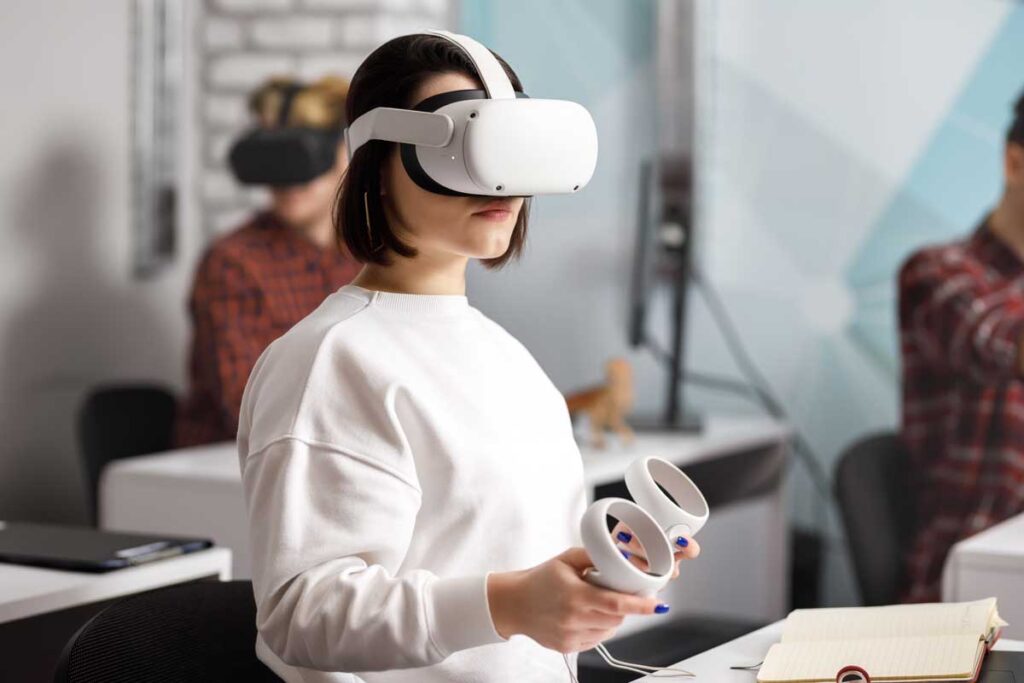
Phygital is a modern, very recent concept that combines the terms Physical and Digital. Applied to the retail sector, the aim is to unify the benefits of the physical environment with those of the digital environment. The goal of phygital is to drive sales from both channels by offering personalized customer experiences. In the retail of the future, the term phygital is particularly relevant. It is a concept that began to be coined in the early days of e-commerce, but it is in recent years that it has become more important. The impact of the coronavirus caused physical purchases to fall below 50% due to successive confinements. Little by little, the more traditional retail has increased its market share again, although online shopping continues to have a more than relevant position. Now that the crisis is over, purchases through the different digital channels have not diminished, but consumers have returned to buying products in physical retailers. Especially in those segments where there is an option to purchase products both in-store and online. What is retail phygical There is often a tendency to confuse phygical retailing with omnichannel marketing, which is typically employed by retailers to engage and interact with customers across different channels to provide a flexible and satisfying shopping experience. However, phygical retail is intended to go one step further. Not all the goodness is found in digital channels, just as it is not in the physical environment. However, the truth is that there is a barrier between the two worlds that is difficult to break. And that is what phygital is all about: breaking down the barrier between the physical and digital worlds so that customers can have a closer experience without having to give up the benefits offered by both alternatives. Little by little, the phygital trend is being incorporated into retailers’ strategies for customer relations in the not only because they have changed their consumption habits or have access to an increasing e-commerce offer, but also because retailers are observing that unifying both environments in a marketing strategy can increase the chances of sales. Betting on the physical store Until now, we have seen how traditional retailers have been incorporating the digital world. Many of them opened ecommerce or started selling their products through social networks. Today, what we are seeing is the reverse trend: those brands that started their business in the digital world are starting to open physical stores. It is estimated that with a phygital strategy, enhanced with the use of technologies such as AI, Big Data or automation, the number of physical stores will gradually increase. For that reason, we can see how brands are greatly enhancing interior design, also known as retail design, so that customers can access a whole world of sensations and experiences that are not possible to achieve in a digital world. In reality, consumers have been immersed in a phygital world for some time now. For example, when a fast food restaurant selects the menu at a digital kiosk or when a cell phone is used to pay in a store. All of these are phygical experiences and examples that combine the advantages of both worlds. Advantages of the phygical model What retail companies want is to put the customer at the center of the strategy and offer them a good shopping experience. In this sense, phygical retailing makes it possible to achieve this objective, and to put it into practice it is essential to have a platform such as RedPoint Global by aggitywhich allows for the development of a personalized interaction with customers regardless of whether the relationship channel is physical, digital or, as is most common, a combination of both. A Customer Data Platform (CDP) allows you to create a complete and detailed picture of your customers, enabling you to provide them with what they need at all times, regardless of the physical or digital environment in which you are operating. Phygical retail is here to stay.
Discover the trends in the retail sector
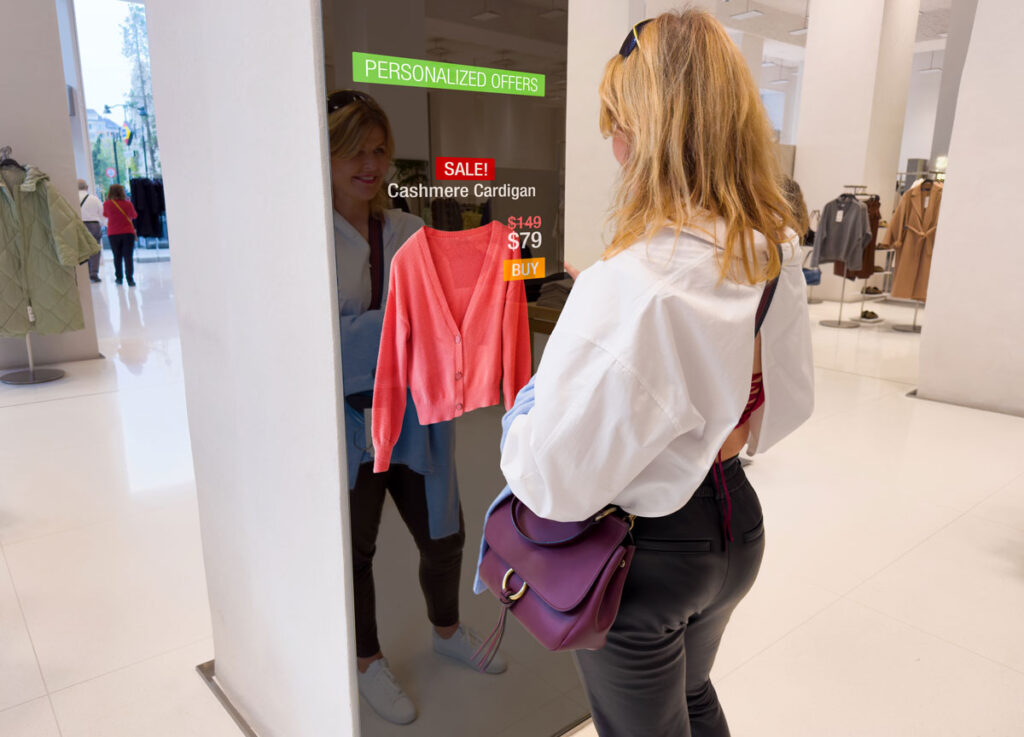
The retail sector has been immersed for years in improving its sales processes. The fundamental change in retail trends is that the customer is now truly at the center of the strategy. Customer loyalty, anticipating their needs, implementing digital marketing platforms or making decisions based on data are some of the trends in the retail sector. Retail news constantly talks about the evolution it has undergone in recent years and also the key role that technology plays in retail trends in 2023 and the retail of the future. If there is one thing that characterizes the retail trade, it is the high level of competitiveness among the different companies that make it up. This situation is the reason why the retail sector has been one of the first to initiate digital transformation processes. The most significant change in the retail sector has come from e-commerce. As reflected in the study «Radiography of retail trade in Spain», e-commerce has become consolidated among retailers in our country, where 56.2% of turnover comes from sales through digital channels. Growth has been exponential and, at present, only 21.1% of companies in the sector do not have a presence on the Internet. Sales in social networks Within the retail sector trends it should be noted that companies in the retail sector have not been satisfied with just having a website or an app to sell their products, but they are implementing new strategies in which sustainability is a priority objective and in which there is a convergence of the physical and online worlds. In addition, the high level of competition has encouraged retailers to seek new business channels and, as a result, social networks have become one of the main means of attracting more consumers and increasing sales. Facebook and Instagram, with 56%, are the channels where there are the highest number of signatures. Behind, TikTok or Twitter, with less than 20% of companies present in these channels. Challenges and trends in the retail sector However, the fact of being in the different digital channels is not enough to maintain the efficiency of the retailer or to increase its sales. The current situation of retail inexorably passes through the customer. The slogan «the customer is always right» has been superseded by the fact that one of the main trends in the retail sector is to put the customer at the center of the strategy. Now it is not only a matter of agreeing with you, but also of anticipating your needs to provide you with what you need at the right time. Likewise, it is essential for customers to feel valued, so companies must make every effort to establish strategies to build customer loyalty. For this reason, one of the major trends in the retail sector is the implementation of solutions and platforms such as Digital Customer Engagement by aggity that incorporate different business and digital marketing solutions that enable increase sales through the use of advanced analytics and content personalization. This type of platform offers retailers a unique view of each and every interaction that the customer has carried out in any of the channels in which they operate. The importance of digital marketing The reality is that the customer’s mentality has changed compared to a few years ago. It is no longer only looking for price and quality, it also demands a commitment to sustainability from the retailer. In addition, consumers demand personalized attention and interaction, which is only possible when the retailer has a 360° view of the customer. To dispose of this unique and complete view of the customerRegardless of the channel with which it relates to the retailer, it is essential to have a Customer Data Platform (CDP) in place, such as RedPoint Global by aggity. This platform is configured as the pillar to achieve omnichannel communication of retailers with customers and is also the basis for sending personalized communications and marketing automation in real time. The objective is none other than to anticipate customer preferences, needs and expectations in order to make the customer feel special with a particular brand or company. In this way, the loyalty of the latter is favored and, therefore, it is possible to have a more or less recurrent income and enjoy their recognition and even love.
Retail digitization and omnichannel shopping

The digitalization of retail is a reality that this sector has become accustomed to living with. It is perhaps one of the sectors that has been investing the longest in all kinds of technologies to accelerate omnichannel shopping for consumers. The digitization of retail is no longer just about having an online presence, but about amplifying the omnichannel shopping experience and enhancing the customer experience. Since the advent of the Internet, several companies have opted for the network as a new channel to increase sales. From the initial rudimentary sales portals and with users fearful of providing bank details to execute purchases to today’s reality, a lot of time has passed, but there has been, above all, an increase in the number of channels through which consumers can make their purchases. Amplifying the omnichannel shopping experience The digitalization of retailing is no longer about having a presence on the web, but rather about amplifying the omnichannel shopping experience and offer consumers multiple options through which they can carry out the different processes: from making the purchase to the way in which the product is distributed. Increase in omnichannel shopping E-commerce in recent years has been characterized by a steady increase in omnichannel shopping . All this means that the growth of commerce using digital channels is increasing every year. As different studies show, more than half of Spanish retailers, exposed to the CPI increase, come from one of the different types of digital channels. This percentage is growing every year and will continue to do so in the future. The consumer is in charge and the retail sector has been adapting to the needs of the consumer. Proof of this is that currently only 21.1% of companies in the sector do not have an online sales channel. The rest not only do so through a website, but have increased the variety of channels to adapt to customer demands, with social networks being the channel in which retailers have invested the most to increase sales. The number of e-commerce services that retailers offer through the different channels: variety of payment methods, possibility of returns, process automationoffering different types of delivery, customer service through different channels… are just some of the elements in which investments are being made. The ultimate goal is none other than to improve the customer’s shopping experience, which will lead to customer loyalty. Improving the omnichannel shopping experience Attracting customers and keeping them loyal to a particular retailer is the goal of any business, especially in an increasingly competitive environment. Therefore, what most companies operating in the retail sector are looking for is to effectively manage all the processes surrounding a purchase. In this sense, the incorporation of specific solutions and platforms, such as Digital Customer Engagement by aggity is gaining particular interest among retailers for improve omnichannel shopping. These tools, thanks to their use and analysis of data, make it possible to offer more personalized interactionsprovide a overview of the different sales channels and allow to perfectly profile each customer. And all this, in real time to respond to user requirements. In short, the incorporation of platforms that generate a increase in omnichannel shopping and ensure the personalized communication with customersThe next big step that companies are already taking to adapt their processes to the retail of the futureThe transformation is taking place in both the digital and physical environments.
Social Business: The best way to address the digital transformation of enterprises
It is a goal that must be reached at all costs. Digital transformation involves changing the approach to business, customers and people in organizations, which implies an evolution of management models. Otherwise, companies run the risk of being left out of a race that is already underway and moving at high speed. How to approach Digital Transformation In all forums and events on IT and business management, the concept of digital transformation ends up being a mantra. But where to start and what to change? The temptation to change everything and do it all at once will lead to failure and excessive costs since companies already have digital technologies, have a certain ICT infrastructure and are composed of people who, in addition to being fundamental in this digital transformation process, have to adapt to it and to the new culture. In this case, is a gradual digital transformation possible, a smooth process that spreads throughout the organization, and is there a formula to measure its impact on human resources and the business? The answer: yes. In this statement, a new concept that society has adapted even before companies: Social Business, plays an essential role. We are not talking about expensive and sophisticated technologies, but technologies that are easy to explain and adopt, inspired by the most widespread social relationship tools in the world; simple to implement and, moreover, at a reduced cost, taking into account the speed with which they have an impact on the organization (cost savings, staff motivation, customer satisfaction, etc.). This impact is also transversal in each and every one of the company’s departments and processes. There can be no digital transformation without first being Social Digital transformation is a process, not an end, that affects the entire organization. Therefore, it requires your involvement and participation. A company cannot be digital if it is not social first. With a Social Business approach, with solutions and tools of this type, we are able to socialize management and involve the entire ecosystem of the organization in this new model: employees, collaborators, customers, suppliers, distributors, partners, business processes and resources such as, for example, machinery, if we are talking about an industrial environment. With the right partners and suppliers, what may seem very complex turns out to be extremely simple. The idea is to take advantage of the massive knowledge and use that employees make of all kinds of communication, collaboration and social networking tools and transfer it to a secure and confidential environment within the company. In parallel, you must be able to combine and connect them with traditional transactional and management systems (ERP, CRM, CMS), mobility technologies, intelligent information analysis (Big Data) and IoT. The technologies included in the concept of Social Business and the new social and collaborative organizational ecosystem that it introduces in companies allow a very fast adoption by the members of the organization, whether internal (employees) or external (customers, suppliers, distributors), so its amortization and return on investment is almost immediate. The benefits of Social Business On digital transformation and Social Business, there are many studies that show that better communication and collaboration based on the use of social technologies is able to increase productivity between 20% and 25%. Organizations that are already experiencing this new model point out that Social Business technologies and solutions applied to digital transformation processes allow: a more agile, dynamic and effective management, reduce management costs, create new business opportunities, boost corporate innovation, accelerate the sale of new products and services, improve the impact of marketing and promotional campaigns, increase transparency and collective knowledge and significant improvements in locating and enhancing talent within companies. Written by BDI Comunicación
MES systems: a global monitoring of Industry 4.0
MES systems automatically monitor, store and trace all activity performed by factory operators, providing detailed information about WHO did the activity, WHAT they did, WHERE it took place and WHEN it was performed. The Haystack Syndrome Maria, the production manager, and Juan, the factory manager, do not have an overview of what is going on «downstairs» for some time, and up-to-date information is conspicuous by its absence. They do not know the detailed status of the progress of the production plan at all times, so it is impossible for them to answer questions to the sales team such as: «Customer ABC is asking me if order 123456 will be delivered on the 3rd of next month, as agreed». The absence of truly reliable information on the time spent on product and format changeovers, cleaning, micro-stops and losses due to low machine speed prevents the implementation of continuous improvement policies. Other factory or production managers do have information, but they have it in very inflexible Excel formats for analysis and, above all, it is not available to be shared with the team at any time. Juan and Maria have realized that they have thousands of data, but when it comes down to it, they cannot find the information that is really relevant for decision making, which prevents them from knowing exactly what is really going on in the factory. They don’t know it, but they suffer from the so-called «haystack syndrome». Having millions of DATA is NOT RELEVANT INFORMATION. Maria often discovers that a level of product rejection is occurring, which is out of control due to a lack of real-time information. When this happens, it is too late, the product is not usable. In trying to organize improvement actions, Maria realizes that, lacking reliable information, she has not asked the operators about their problems, nor has she given them feedback on how things are going. In short, it has not involved them in the detection and solution of problems… it is a fish that bites its own tail. MES systems or software: What are they and what do they do? A smart factory or factory 4.0 has a system that captures data from production and other manufacturing areas such as maintenance, quality, logistics and planning, crosses them and generates relevant information that helps to make decisions in the short, medium and long term, and with a multidisciplinary vision (a factory is not only production). These systems are known as MES systems or Software MES (Manufacturing Execution System). From a strictly production point of view, every MES system: Collects data automatically. Details machine stoppages and reasons for rejected product. Allows paperless management of the entire factory. It shows the realized and pending production in real time, allowing to know how is the production plan at any time and from any place. Analyzes productivity and resource efficiency. Provides reports for short-, medium- and long-term production management. Plots direct and indirect activities, justified machine stoppages, preparations, quantities produced, rejects according to type, rework. Monitor resources and consumption in real time. It has real-time dashboards (operator, machine, OF…). Enables workload histograms for each machine. Generates interactive maps of factory, department, area or work center, showing the status of the machines at all times. MES systems automatically monitor, store and trace all activity performed by factory operators, providing detailed information about WHO did the activity, WHAT they did, WHERE it took place and WHEN it was performed. INDUSTRY 4.0 is synonymous with INTERCONNECTIVITY between machines, things, people, systems, processes, and other actors such as customers, suppliers or other types of collaborators. MES solutions are at the heart of all connectivity if the production process is to be oriented towards the smart factory, and are the management solution par excellence for shift managers, area managers, factory managers and industrial managers. Written by David Fernández Industry Area Manager at aggity